
Pattern Mixing Dining Chairs: A Designer Formula for Mixing Fabrics
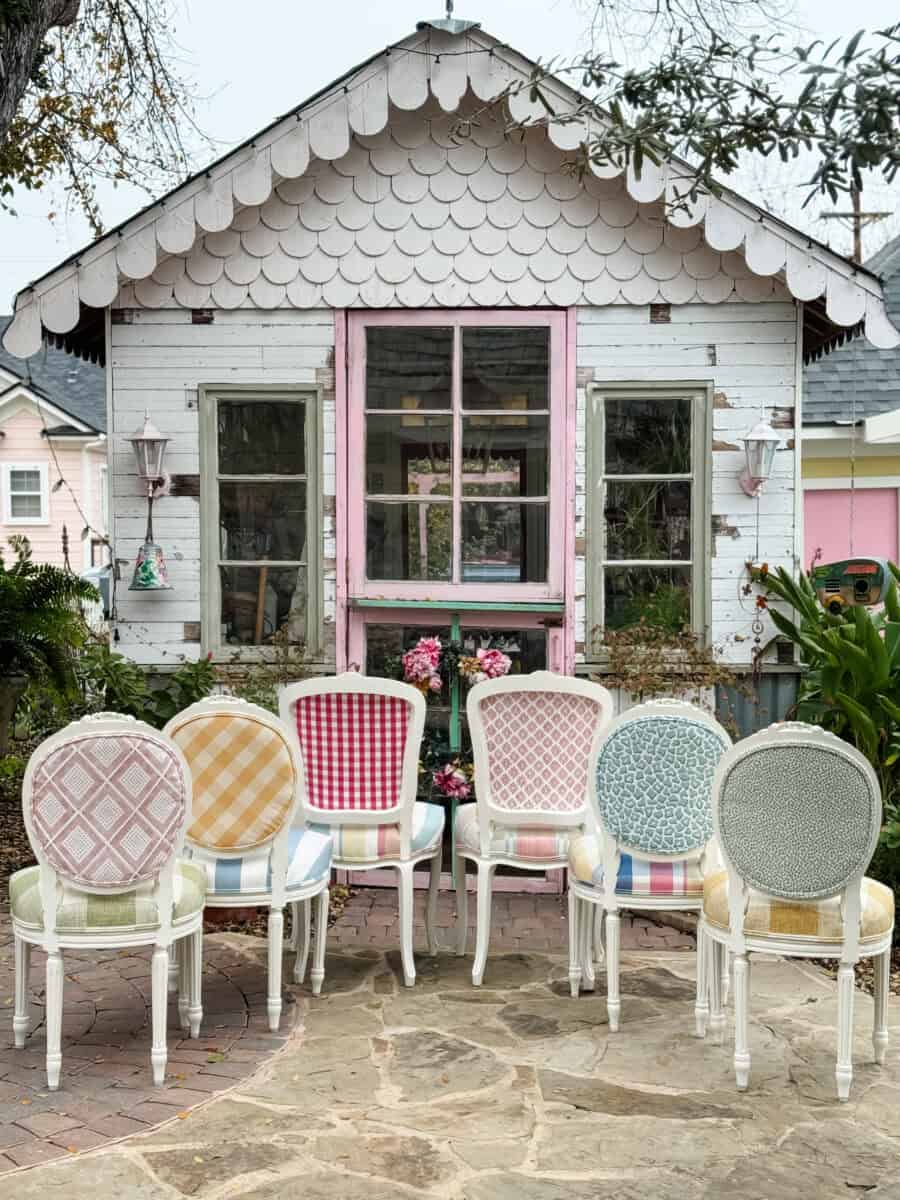
Pattern mixing on dining chairs can feel intimidating—but when done with intention, it’s one of the most impactful ways to create a collected, designer look. This set of six antique dining chairs is a perfect example of how repeating patterns with variation creates harmony and personality.
In this post, I’m breaking down my exact pattern‑mixing formula for dining chairs, so you can confidently mix florals, stripes, plaids, and checks in your own home—without the guesswork.
Start With One Hero Fabric (And Commit to It)
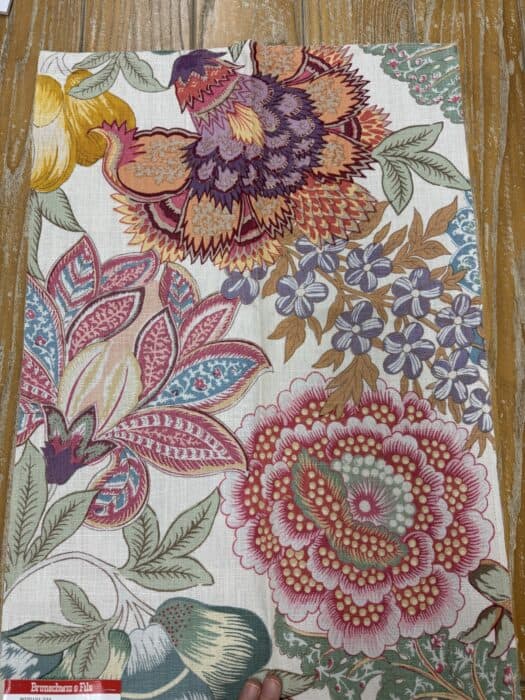
Every successful pattern‑mixed chair set begins with a hero fabric.
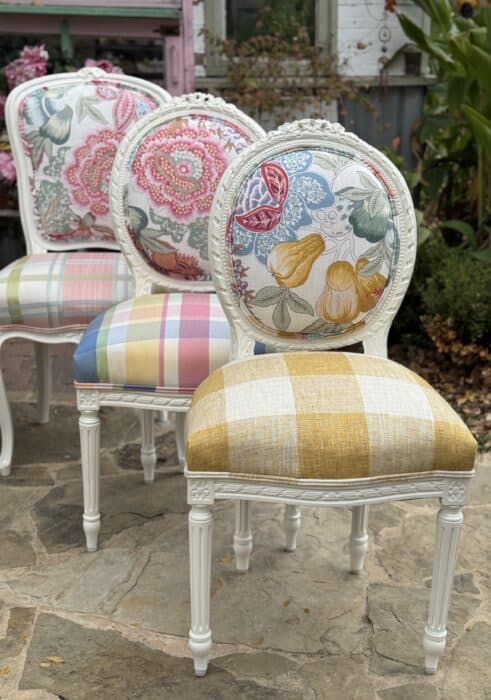
For these chairs, I chose one floral fabric and used it on the top back of all six chairs. This single decision does most of the heavy lifting. Repeating the same floral instantly creates cohesion, even though every other fabric in the set is different.
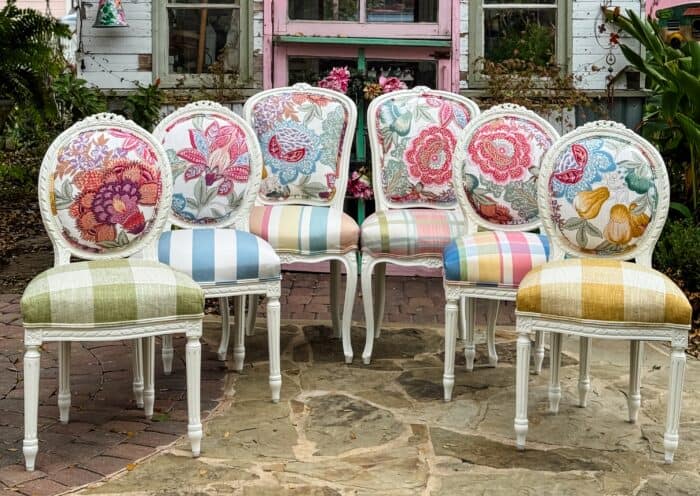
To keep things interesting, I didn’t place the floral the same way on each chair. I:
- Rotated the fabric
- Turned it sideways
- Flipped it upside down
This allowed me to highlight different parts of the pattern—flowers, leaves, stems—so no two chairs feel identical, even though they share the same fabric.
✨ Pro tip: When using a large‑scale floral, don’t be afraid to treat it like artwork. Crop it intentionally.
Keep the Frame Color the Same
All six chairs were painted Linen White by Benjamin Moore, and this consistency is key. These chairs looked nothing alike, so to make them cohesive I painted them the same color.
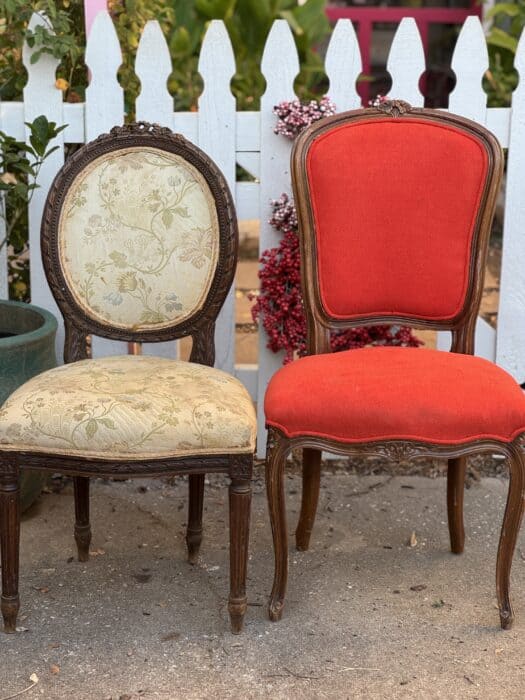
When you’re mixing multiple fabrics, a uniform frame color acts as a visual anchor. Linen White is soft, warm, and classic—perfect for letting the patterns shine without competing.
If you’re nervous about pattern mixing, this step alone will make everything feel calmer and more intentional.
The Seat Formula: Repeat, But Do It Evenly
Here’s where my repeat‑with‑balance formula comes into play.
For the seats, I used:
- 2 stripes
- 2 plaids
- 2 checks
Instead of using six different seat fabrics, I repeated patterns evenly. This creates rhythm and keeps the set from feeling random.
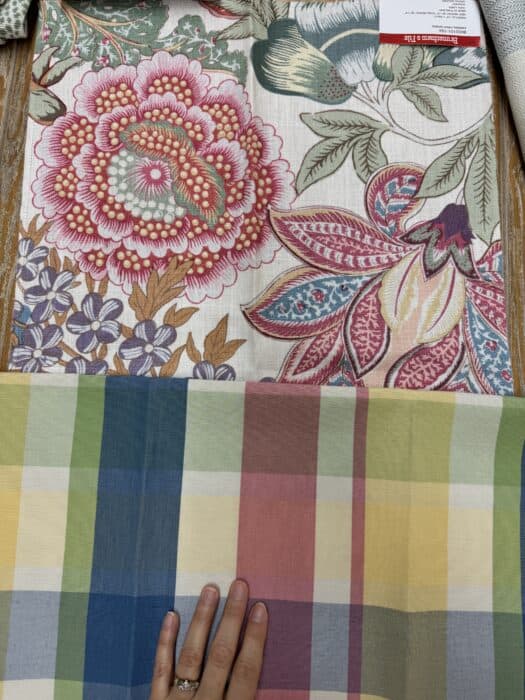
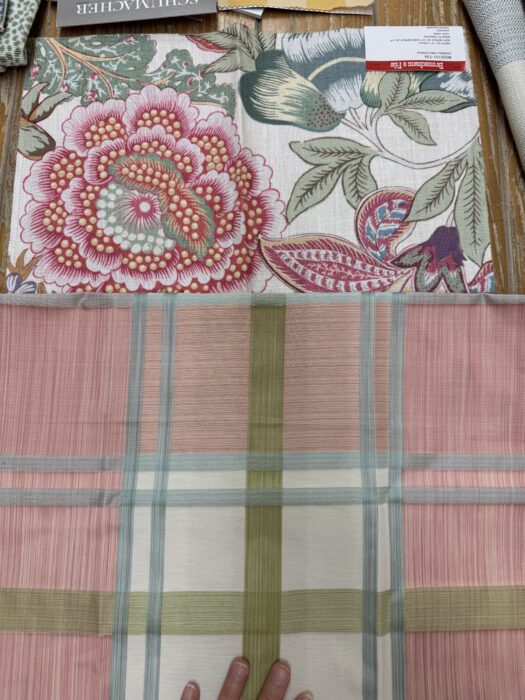
The key is distribution. You don’t want all the stripes on one side or all the plaids grouped together. Spread them out so the eye moves comfortably across the entire set.
This approach works beautifully for:
- Dining chairs
- Accent chair groupings
- Breakfast nook seating
Backside Fabrics: One‑of‑a‑Kind With a Color Plan
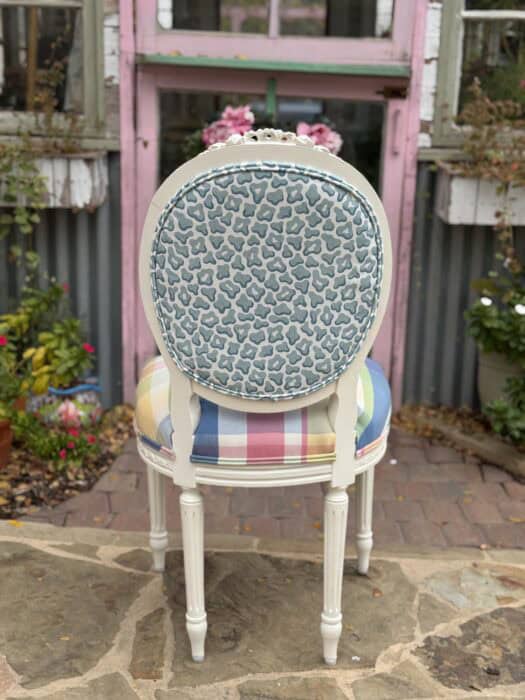
The backsides of these chairs are where the real fun happens. Here are some contenders but not all of them made the cut.
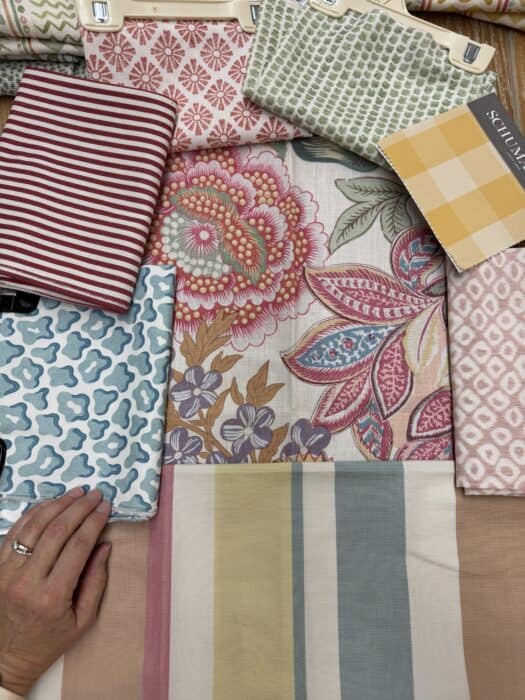
Each chair has a different pattern on the backside, but I followed a clear color strategy to keep it cohesive. Each fabric highlights a different color family:
- Blue
- Green
- Pink
- Red
- Yellow
- Coral
Even though every backside fabric is unique, the shared floral on the front and the repeated seat patterns make the variety feel intentional—not busy.
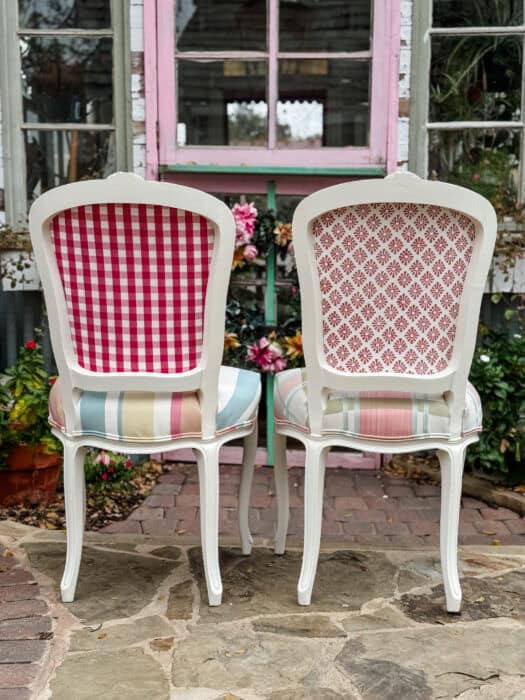
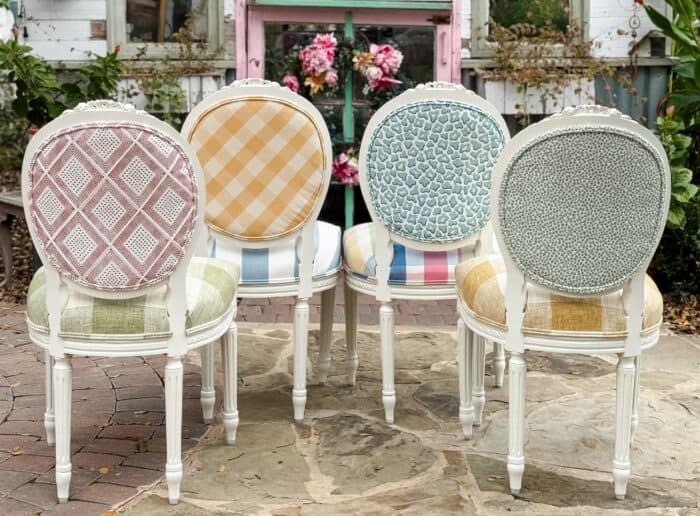
This is one of my favorite designer tricks: let the surprise live on the backside.
Why This Pattern Mixing Works
Let’s break down why this set feels balanced instead of overwhelming:
✔ One repeated floral fabric ties everything together
✔ One consistent paint color grounds the design
✔ Patterns are repeated evenly (not randomly)
✔ Color is distributed thoughtfully across the set
✔ Fabric placement varies for visual interest
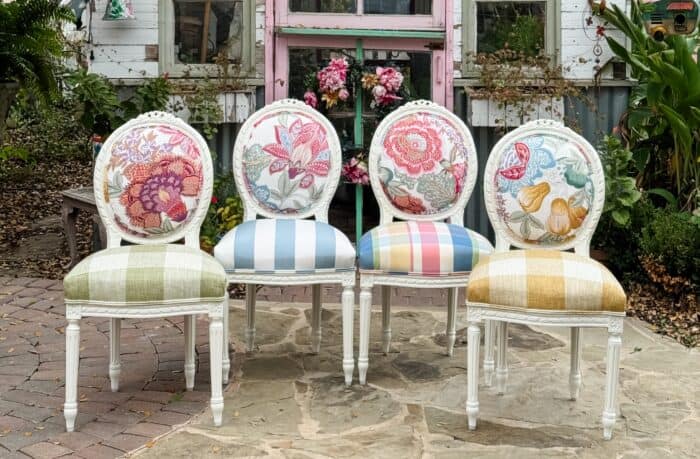
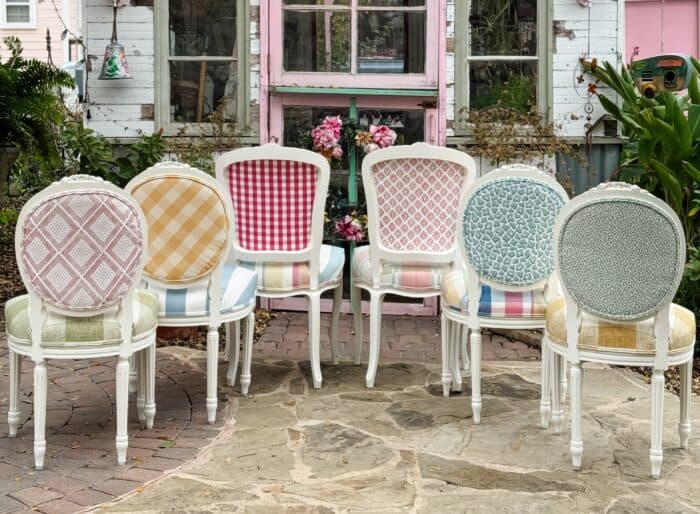
Pattern mixing isn’t about rules—it’s about relationships between fabrics.
How to Use This Pattern Mixing Method in Your Own Home
You can apply this same formula whether you’re working with antique dining chairs, thrifted finds, or modern seating:
- Choose one hero fabric and repeat it
- Keep the chair frames the same color
- Limit seat patterns and repeat them evenly
- Let the backsides be playful and unexpected
- Rotate and crop fabrics intentionally
If you’ve ever worried that mixing patterns would feel “too much,” this method proves that structure creates freedom.
Final Thoughts: No Two Chairs Should Be the Same
My goal with pattern‑mixed chairs is never perfection—it’s personality.
By twisting, turning, and thoughtfully repeating fabrics, you can create a dining chair set that feels layered, joyful, and completely one of a kind.
And the best part? There’s no single “right” way—only the way that feels best to you.
If you love pattern mixing on dining chairs, you might love this previous post. Tap here.
Check out my online courses to spark your creativity and upgrade your joy, starting today!



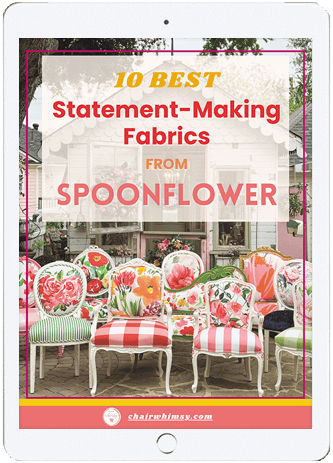

10 Best Statement-Making Fabrics from Spoonflower